
Understanding Pheomelanin-Dominant Skin and Its Hydration Needs
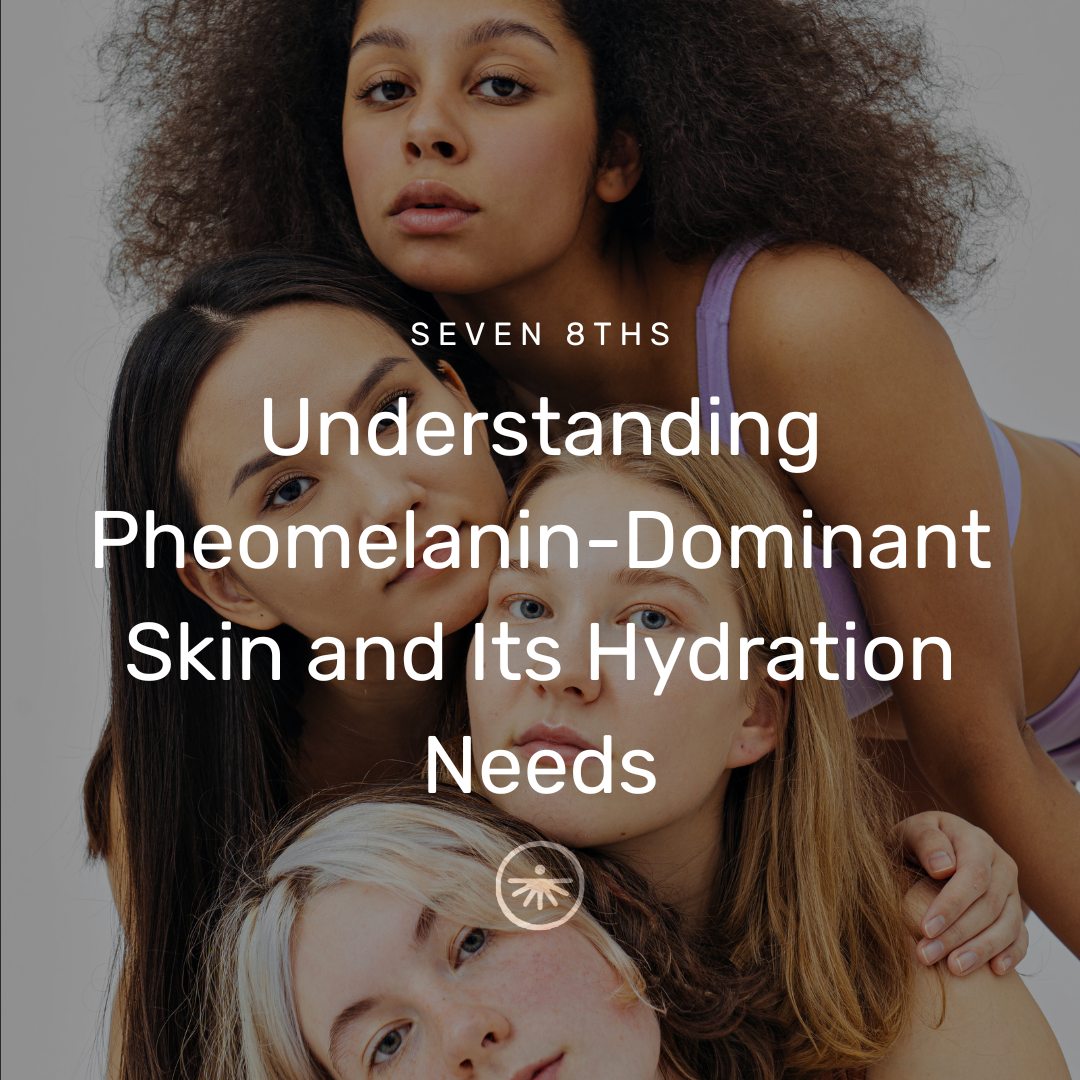
Your skin is not a single, uniform surface. Across the body, its structure, behavior, and needs vary — and one of the most meaningful variables is its melanin. Understanding which of the two types of melanin that dominates your skin's pigmentation is a foundational step in building a whole-body skincare practice that truly serves you.
What Is Pheomelanin?
Pheomelanin is the pale, warm yellow, golden, and reddish-brown pigment present in all human skin. When pheomelanin is present in higher proportions than eumelanin, the resulting skin tone is considered pheomelanin-dominant. Your skin produces two forms of melanin—pheomelanin and eumelanin—and it is the unique combination of these two pigments that creates your individual skin color.
Of the two, pheomelanin is more photoreactive. In response to heat and sun exposure, pheomelanin-dominant skin tends to flush more easily, freckle more readily, and lose moisture faster. This does not make the skin fragile; it simply means it requires more focused attention and care. Pheomelanin-dominant skin generally benefits from more frequent hydration and greater protection from environmental stressors.
The ratio of pheomelanin to eumelanin influences more than skin color. It also affects how your skin responds to UV exposure, environmental stress, and daily wear, including how effectively it retains moisture and how well its protective barrier functions over time.
How Pheomelanin-Dominant Skin Responds Differently
Pheomelanin-dominant skin tends to be more reactive to UV radiation. Unlike eumelanin, which acts as a natural shield, it absorbs and dissipates UV energy effectively. When exposed to UVA or UVB energy, pheomelanin can act as a photosensitizer. Instead of safely dissipating the energy, it can trigger oxidative stress and produce excess free radicals (ROS), which can directly damage DNA and increase the risk of skin cancer and melanoma, even without severe sun exposure. This makes pheomelanin-dominant skin significantly more susceptible to UV-induced photodamage, oxidative stress, and accelerated breakdown of the overall skin structure.
Over time, this persistent state of stress leads to:
-
Increasing transepidermal water loss, causing chronic low-grade dehydration across the blanket of skin
-
Greater sensitivity and reactivity to environmental stressors, including heat, wind, and friction
-
Reduced collagen and elastin production and resilience, leading to earlier visible signs of aging
-
A compromised barrier that struggles to retain moisture and regulate against irritation
These dynamics affect the entire skin organ—not just the face. Yet most conversations about pheomelanin-dominant skin remain focused above the chin. The other seven-eighths of the body carries the same vulnerabilities and deserves the same regular, consistent attention that is commonly given only to the face. For pheomelanin-dominant skin, this is even more important.
The entire blanket of pheomelanin-dominant skin generally requires more regular and consistent moisturization than eumelanin-dominant skin due to its greater tendency toward transdermal water loss. To support optimal skin function, hydration and barrier support should extend beyond the face and be applied to the skin as a whole.
Hydration as a Cornerstone of Skin Function
Hydration, both internal and external is vital and foundational to all skin. The skin's ability to maintain its barrier, retain moisture, and regulate against environmental stress depends directly on the quality and consistency of the hydration it receives. Thus, for pheomelanin-dominant skin, very regular and consistent hydration is absolutely vital to its general health and its longevity.
A weakened barrier does not just feel dry. It allows irritants to penetrate more easily, accelerates moisture loss, and reduces the skin's ability to recover from daily exposure. This cycle compounds over time, particularly when the majority of the skin — the 7/8ths — is left without regular and consistent care.
Supporting your barrier means working with formulations that provide genuine nourishment: plant oils, botanicals, and lipid-replenishing ingredients that reinforce the skin's natural structure rather than simply coating its surface.
Caring for Pheomelanin-Dominant Skin Across Your Whole Body
A whole-body approach to caring for pheomelanin-dominant skin centers on three priorities:
-
Regular and consistent hydration across the entire blanket of skin, applied multiple times throughout the day, especially after cleansing when the skin is most receptive.
-
Daily use of broad-spectrum SPF protection on all exposed areas of skin—not just the face—to help reduce UV-driven oxidative stress, along with the use of protective clothing when appropriate.
-
The use of formulations free from synthetic irritants, artificial fragrances, and harsh actives that may irritate the skin and further compromise an already reactive barrier.
Regular and consistent attention to your entire blanket of skin is especially important for skin that requires more focused care and support.
Applying nourishment with focused intention, while remaining mindful of how your skin responds and thrives under consistent care, cultivates yet another level of self-awareness.
This is where self-care becomes whole-body self-knowledge—self-awareness.
Understanding Your Skin as One Whole Unit
Pheomelanin-dominant skin is not fragile—it simply has specific needs and requirements for health and vitality. When those needs are understood and met with regular, consistent care and attention, your skin will respond with harmonious balance, resilience, vitality, and longevity.
Your entire blanket of skin—every tone, every texture, every sensitive patch—is worth knowing. Worth understanding. Worth supporting.
You are worth knowing.
You are worth supporting.
Remember, your entire blanket of skin is your first reference of self.
Care for your entire blanket of skin. Care for your entire self.
One World. One Body. One Unit System.
Seven 8ths.